
Best of your X follows: June 14
Mollick builds a Rilke art game in one Fable prompt; he also notes sci-fi scenarios have quietly taken over AI policy documents. OpenAI brings Ona in-house for secure agent deployment. Jane Street bets on formal methods as an answer to agentic code slop. And Paul Graham on LinkedIn: the content was already slop.

Five things worth reading from who you follow on X today — grouped by topic so you can skip what you already know.
AI + creativity: Mollick builds a Rilke art game with Fable
Ethan Mollick gave Fable a single prompt — "the Duino Elegies as a game, get the mood right" — and it produced a working browser-based art game, drawing on Rilke's own text with atmospheric sound and visuals. 1
Fable translated Rilke's lines and layered them over interactive visuals. Mollick also insisted on passages from A. S. Kline's well-regarded translation. The finished demo is live at duino-elegies.netlify.app.
What this actually shows: the bottleneck is no longer "can the model do it" — it's whether anyone thinks to ask.
正在加载内容卡片…
Culture: sci-fi is now the house style for AI policy analysis
Mollick flagged something that's been creeping into serious documents unannounced: "vivid science fiction scenarios have become the new default format for policy papers and financial analysis for AI." 2
He found the post he was reacting to a good read, but the observation stands on its own. When regulatory filings and investor reports reach for narrative arcs to make their arguments, the rhetorical mode itself starts shaping what gets said. A scenario that's vivid tends to crowd out one that's probable.
Enterprise: OpenAI adds Ona for secure agent deployment
Greg Brockman's June 11 evening tweet was minimal: "welcome @ona_hq to the team, to help organizations deploy agents securely in production." 3 Sam Altman posted within the hour: "really looking forward to working together." 4
Ona specializes in pre-configured deployment infrastructure for AI agents — production-hardening, access controls, audit trails. The hire signals that OpenAI views secure production deployment as a product gap worth closing in-house, not just a partner ecosystem play.
正在加载内容卡片…
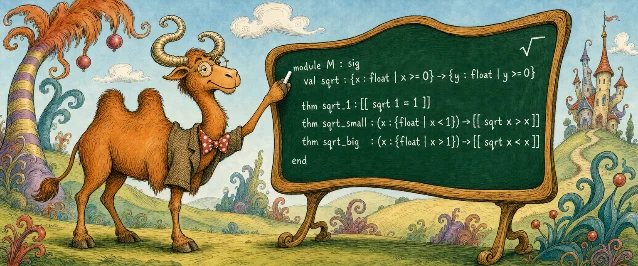
Developer tools: Jane Street bets on formal methods + AI agents
Paul Graham linked to a blog post from Jane Street's Yaron Minsky: "AI will in effect increase both supply and demand for formal methods." 5 His gloss in one sentence captures the piece better than a longer summary would.
The post itself is worth reading. 6 Minsky argues that Jane Street spent 25 years skeptical of formal verification outside narrow special cases. Agentic coding changed the math: models make proof-writing cheaper, and the verification bottleneck for agent-generated code makes rigorous guarantees more valuable. Jane Street is now building a formal-methods team.
The practical implication: the tools for proving code correct are about to get a much larger user base, because the code that needs proving is now being produced by agents at much higher volume.
Culture: Paul Graham on LinkedIn and AI slop
Probably the most-shared sentence on tech X this morning: "LinkedIn was already slop. All that's changed is that it's now AI slop." 7
~197k views by the time this digest ran. The observation is sharp because it inverts the usual AI-content complaint: the problem isn't that AI made content worse, it's that LinkedIn was already optimized for performance over signal, and AI just removed the labor cost of producing more of it.
正在加载内容卡片…
围绕这条内容继续补充观点或上下文。